
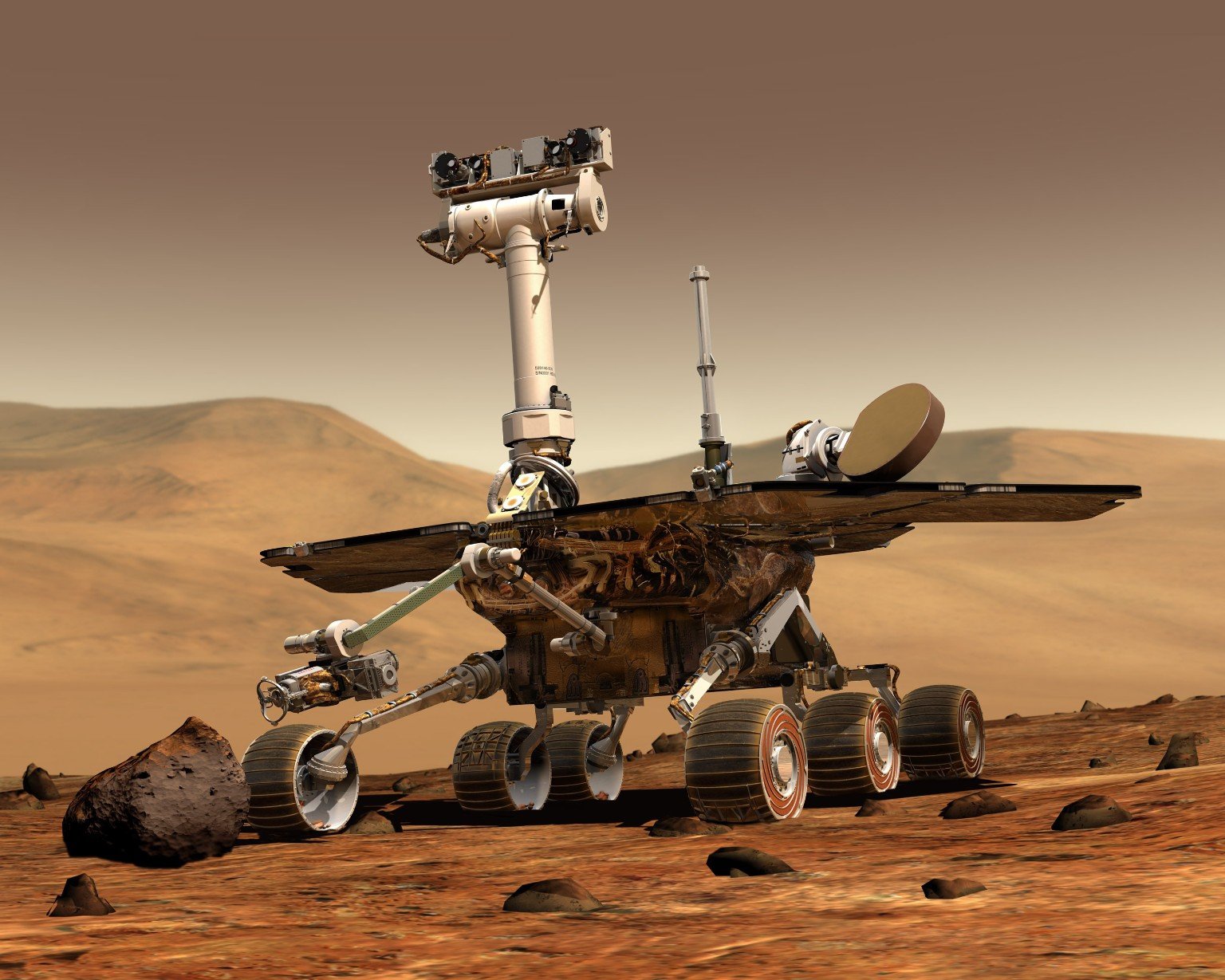
For most of the modern era, humanity described its movement beyond Earth as space exploration. The phrase was appropriate. Rockets crossed a frontier, spacecraft reached unfamiliar worlds, astronauts became symbols of collective ambition, and every successful mission expanded the map of the possible.
But exploration is no longer sufficient to describe what is happening.
Space has become an extension of the scientific instrument. Telescopes operate beyond the distortions of the atmosphere. Probes examine planetary chemistry in situ. Sample-return missions deliver fragments of ancient worlds to terrestrial laboratories. Satellites observe Earth's climate, magnetic environment and place in the Solar System. Experiments in microgravity reveal physical behaviour that gravity normally conceals. Autonomous spacecraft decide which rocks, storms or signals deserve scarce attention.
This is why Space Science is a more durable category than “space travel” or even “space exploration.” Exploration asks where humanity can go. Space science asks what humanity can understand when it gets there—and what can be understood only by leaving Earth.
Long before space becomes a permanent extension of human civilization, it is already becoming an extension of human knowledge.
Why the name matters
Category names shape expectations. “Space” is broad but imprecise. “Space industry” emphasizes markets, launch services and infrastructure. “Space exploration” evokes destinations, vehicles and historic firsts. Each is valid, but none captures the complete scientific transformation.
Space science includes astronomy, astrophysics, planetary science, astrobiology, heliophysics, Earth observation, microgravity research and the study of human biology beyond Earth. It includes robotic missions and human expeditions, but treats them as methods rather than ends. A launch is not the discovery. It is the means by which an instrument reaches a place where discovery becomes possible.
This distinction protects the subject from the rhythm of publicity. Rocket launches are dramatic and immediate. Science is slower. Instruments require calibration; observations must be processed; competing explanations must be tested; findings may change after better data arrive. A mission can succeed technically before producing its most important scientific result, and a spectacular image can be less consequential than a subtle change in a spectrum.
Choosing “Space Science” therefore anticipates a mature phase of humanity's relationship with space. The measure of progress is not only distance travelled, mass launched or photographs returned. It is the quality of the questions we can ask and the reliability of the evidence we can bring home.
Moving the observatory beyond the atmosphere
Earth's atmosphere makes life possible, but it also filters the Universe. It absorbs many wavelengths, distorts incoming light and produces turbulence that blurs astronomical images. Ground-based observatories can compensate for some effects and remain indispensable, particularly because they can support enormous instruments that are maintained and upgraded. But space telescopes open windows that the ground cannot fully provide.
The James Webb Space Telescope illustrates this change. Operating near the Sun–Earth L2 region, Webb observes primarily in infrared wavelengths. It can examine light stretched by the expansion of the Universe, see through some dust clouds and measure chemical signatures in planetary atmospheres.
Its value is not simply that it produces beautiful pictures. Spectroscopy separates light according to wavelength. Molecules absorb and emit at characteristic patterns, allowing scientists to infer aspects of composition, temperature and physical conditions from extraordinary distances.
In 2025, Webb directly imaged planets in the HR 8799 system and detected strong carbon-dioxide features, providing evidence relevant to how those giant planets formed. In 2026, observations of WD 1856 b detected methane and helped researchers examine how a giant planet may have survived the evolution of its star into a white dwarf. These are not photographs in the ordinary sense; they are physical measurements of worlds that cannot be visited.
The limitations are equally instructive. In the TRAPPIST-1 system, stellar flares and star spots complicate attempts to isolate atmospheric signals from the planets. NASA reported that data had ruled out some thick atmospheres for several planets, while other questions remained unresolved and could require many additional transits. Space science advances not only by announcing detections, but also by determining which interpretations the evidence does not yet support.
That patience is essential in the search for life. A molecule associated with biology on Earth is not automatically proof of life elsewhere. Geological, photochemical and atmospheric processes can create false positives. A credible biosignature would require context, multiple lines of evidence and the exclusion of plausible non-biological explanations.
From images to maps of cosmic history
Some space observatories investigate individual systems; others survey immense populations.
The European Space Agency's Euclid mission is designed to map the large-scale structure of the Universe across more than one third of the sky. By observing the shapes, distances and distributions of billions of galaxies across cosmic time, the mission aims to study how structure formed and how cosmic expansion evolved—evidence relevant to dark matter, dark energy and gravity.
Euclid's first public survey release in March 2025 covered three preview regions totalling about 63 square degrees. ESA reported 26 million detected galaxies in the release, alongside a first classification effort involving more than 380,000 galaxies and 500 gravitational-lens candidates. Artificial intelligence and citizen science contributed to classification, showing that modern space science is not performed by a spacecraft alone. It is a network of detectors, data pipelines, algorithms, researchers and public participation.
The scale changes the nature of astronomy. Earlier generations often studied scarce objects one by one. Survey astronomy allows scientists to reason statistically about populations, rare events and the architecture of the cosmic web. The observatory becomes not only a camera but a census instrument for the Universe.
Yet a larger dataset does not automatically produce better knowledge. Calibration errors, selection effects, model assumptions and classification bias can propagate across millions of objects. The scientific achievement includes characterizing those uncertainties. The final cosmological result is only as trustworthy as the chain connecting a photon at the detector to an inference about the Universe.
Returning pieces of other worlds
Remote sensing reveals enormous territories, but laboratories on Earth can analyze matter with instruments too large, sensitive or adaptable to place on a spacecraft. This makes sample return one of the most powerful forms of space science.
NASA's OSIRIS-REx mission returned 121.6 grams of material from asteroid Bennu in September 2023. The quantity was small by everyday standards and immense by the standards of pristine asteroid material. Because the sample was collected directly and protected from uncontrolled exposure, researchers could investigate ancient chemistry with far greater confidence than is often possible with meteorites that have passed through the atmosphere and rested on Earth.
Studies published in 2025 found abundant ammonia and nitrogen-rich organic matter, including amino acids and all five nucleobases used in terrestrial DNA and RNA. Subsequent work reported complex nitrogen- and oxygen-rich polymeric material and, in 2026, bio-essential sugars including ribose and glucose.
These discoveries do not show that Bennu contained life. They show that several classes of molecules important to life can form or persist in extraterrestrial environments and may have been distributed through the early Solar System. That is a more careful and scientifically significant conclusion.
The samples also preserve future knowledge. Curators retain material for instruments and questions that do not yet exist. Lunar samples collected during the Apollo era continue to produce results decades later because analytical technology improves. A sample-return mission is therefore a dialogue between generations: one generation reaches the object, and several later generations may learn from what was returned.
This is space science at its most literal. A distant world becomes part of the terrestrial laboratory without ceasing to carry the history of its origin.
The search for life is a search for context
Astrobiology is often reduced publicly to one question: Are we alone? Scientific practice divides that question into many testable problems.
How do organic molecules form in space? Which environments sustain liquid solvents? How long can complex chemistry persist? What energy gradients could support metabolism? Which atmospheric combinations would be difficult to maintain without biology? How does a planet's star alter its atmosphere? Can material move between worlds while preserving relevant chemistry?
Our Solar System provides several natural laboratories. Mars preserves evidence of ancient water and potentially habitable environments. Europa and Enceladus appear to contain subsurface oceans, with Enceladus ejecting material into space through plumes. Titan has a dense atmosphere and complex organic chemistry. Primitive asteroids preserve material from the early Solar System.
Each destination demands a different strategy. A rover can study geological context on Mars. A flyby can sample a plume without landing. A telescope can compare atmospheres across distant planets. A returned sample can be examined repeatedly on Earth.
The strongest evidence will come from convergence. A single molecule, unusual image or statistical anomaly is rarely enough. Scientists need geology, chemistry, isotopic patterns, environmental conditions and independent measurements that fit one explanation better than the alternatives.
This is why responsible space science resists sensational headlines. “Potentially habitable” means that some known conditions may be compatible with life; it does not mean inhabited. “Organic” means carbon-containing chemistry; it does not mean biological. “Building blocks of life” are ingredients, not organisms.
Precision does not diminish wonder. It protects wonder from being spent on claims that the evidence cannot sustain.
The Moon and Mars as scientific archives
Human missions are often framed in terms of presence: flags, habitats, bases and a future economy. Their deepest enduring value may be scientific.
The Moon is a 4.5-billion-year archive. Its surface records impacts, radiation and material from the history of the Earth–Moon system. Without weather, oceans or active plate tectonics reshaping the landscape as they do on Earth, ancient records may remain accessible. Polar regions also contain volatile materials in permanently shadowed areas, potentially preserving information about deliveries from comets, asteroids and the solar wind.
NASA's Moon-to-Mars science objectives explicitly connect human explorers with surface and orbital robotic systems. The important idea is human–machine scientific cooperation. Astronauts can recognize unexpected geology, adapt sampling and deploy instruments. Robots can work longer in hostile locations, monitor continuously and reach areas too dangerous or inaccessible for people.
Mars presents a different archive. Its rocks record a planet that once had rivers, lakes and a thicker atmosphere. Understanding why Mars changed can illuminate planetary climate evolution and the conditions that allow habitability to persist or disappear.
Neither world should be treated as a simple stepping stone. If exploration infrastructure damages scientifically valuable sites, contaminates environments or prioritizes symbolic milestones over careful measurement, presence can reduce knowledge instead of expanding it.
The future of lunar and Martian science will therefore require environmental protocols, sample integrity, shared standards and decisions about which regions should be protected. Exploration and preservation are not opposites; preservation makes exploration scientifically meaningful.
Defending Earth by understanding small bodies
Space science also protects the planet.
On 26 September 2022, NASA's Double Asteroid Redirection Test spacecraft deliberately struck Dimorphos, the small companion of asteroid Didymos. The mission was the first full-scale demonstration of a kinetic impactor at an asteroid. Measurements showed that the impact changed Dimorphos's orbit, while debris ejected from the surface amplified the momentum transfer.
DART did not respond to an imminent threat. It tested a method before an emergency existed. That distinction represents unusually mature risk management: identify a low-probability but high-consequence hazard, measure the relevant physics and develop options while there is still time.
Kinetic deflection is not a universal solution. Effectiveness depends on an object's size, composition, structure, rotation and warning time. A loosely bound rubble pile may respond differently from a dense body. Deflection also requires precise orbit determination so that intervention reduces risk rather than moving it elsewhere.
Planetary defence therefore begins with surveys. Humanity must discover near-Earth objects, track them, refine their orbits and characterize their properties. The spectacular collision was one moment in a much larger scientific system of detection, modelling and international coordination.
The lesson extends beyond asteroids: knowledge acquired before crisis creates choices during crisis.
The Sun is part of Earth's technological environment
Space weather makes the boundary between space and daily life disappear.
The Sun releases radiation, energetic particles and magnetized plasma. When solar disturbances interact with Earth's magnetosphere and upper atmosphere, they can produce auroras but also affect satellites, navigation, radio communication, astronaut exposure and electrical infrastructure.
Modern society is more sensitive to these effects because timing, communication, finance, transport and emergency systems depend on space-based services. Studying the Sun is therefore not distant astronomy. It is infrastructure science.
Heliophysics missions observe the Sun, solar wind and magnetic environment from different locations. Models combine those observations to estimate when disturbances may reach Earth and how strongly they may couple with its magnetic field. Forecasting remains difficult because a solar eruption's orientation and internal magnetic structure strongly influence its effects.
Better space-weather science requires continuous observation, resilient satellites, shared data and honest communication of uncertainty. A forecast should help operators decide when to protect equipment without implying a precision that the underlying measurements cannot deliver.
As humanity operates farther from Earth's magnetic protection, this knowledge also becomes biological. Radiation exposure is a constraint on long-duration lunar and Martian missions. Space weather will shape mission timing, habitat design and emergency procedures.
Microgravity turns orbit into a laboratory
The International Space Station is commonly described as a place where astronauts live and work. Scientifically, it is a laboratory in a persistent state of free fall.
Microgravity alters convection, sedimentation, fluid behaviour, combustion, crystal growth and biological systems. Removing gravity as a dominant variable can reveal processes that are difficult to isolate on Earth. The purpose is not that everything becomes more useful in space; it is that a different environment allows different questions.
NASA's Cold Atom Laboratory, operated remotely aboard the station, cools atoms to extremely low temperatures and has produced Bose–Einstein condensates in orbit. Microgravity allows ultracold atomic clouds to be observed over longer free-evolution times than many terrestrial arrangements permit, opening avenues for fundamental physics and future precision measurements.
Biological research is equally important. Spaceflight changes bone, muscle, fluid distribution, immunity, vision and microbial behaviour. These effects are operational risks for astronauts, but they can also help researchers study biological mechanisms relevant to health on Earth.
Claims of revolutionary products made in orbit should nevertheless be tested economically and scientifically. A process may work in microgravity yet remain impractical once launch cost, equipment reliability, production scale and return to Earth are included. The scientific value of an orbital experiment does not automatically establish a viable space-manufacturing industry.
The laboratory model remains the correct foundation: formulate a question, control variables, measure the result and allow independent scrutiny.
Autonomy becomes necessary with distance
As spacecraft travel farther from Earth, communication delay makes constant human control impossible. Mars can be minutes away by radio depending on orbital positions; distant missions face longer delays, limited bandwidth and intermittent contact.
Autonomy is therefore not merely convenient. It can determine how much science a mission accomplishes.
A rover may need to avoid hazards, select an efficient route, prioritize observations or recognize an unusual feature before it passes beyond reach. A spacecraft near an icy moon may have only a brief opportunity to collect data while operating in a hazardous radiation environment. Waiting for instructions from Earth can mean losing the event.
A 2025 field study of rover science autonomy compared human-directed, rover-directed and collaborative geological exploration. It encoded scientific hypotheses and relevant observations into a rover system, examining how autonomy could affect operational efficiency and scientific return. Such experiments point toward machines that do not merely navigate, but participate in deciding which measurements best test a question.
This must remain bounded autonomy. Scientific priorities, safety constraints and acceptable actions are established by mission teams. Onboard systems need fault detection, protected modes and explanations sufficient for investigators to reconstruct why a decision was made. Generative models may eventually assist planning, but spacecraft cannot depend on unverified fluency where repair is impossible.
The most promising architecture combines strengths: humans define objectives and interpret broader meaning; autonomous systems react at machine speed to local conditions; both preserve a record that makes the scientific process auditable.
Earth observation is also space science
Looking outward is only half of the story. Some of the most consequential space instruments look back at Earth.
Satellites measure temperature, sea level, ice, vegetation, atmospheric composition, soil moisture, fires and changes in land use. They observe across political borders and repeat measurements over decades. This creates evidence for weather forecasting, disaster response, agriculture and climate science that no collection of local stations could provide alone.
Remote sensing does not replace measurements on the ground. Satellite instruments infer physical properties through radiation, radar or other signals; those inferences require calibration and validation. Clouds, surfaces, orbital changes and instrument drift can complicate long-term records.
The most reliable Earth science combines orbital and terrestrial observation. A satellite provides scale and continuity. Field instruments provide local detail and independent checks. Models connect the measurements into explanations and forecasts.
Including Earth observation within Space Science is conceptually important. Space is not only a destination beyond our planet. It is a vantage point from which Earth becomes measurable as a connected system.
Science, commerce and governance
Commercial launch providers, satellite manufacturers and private research platforms can reduce costs and expand access. Public agencies increasingly purchase services rather than building every component internally. This can accelerate innovation and allow scientific teams to fly instruments more frequently.
But scientific and commercial incentives are not identical. A company's objective may be speed, market share or investor return. Scientific research prioritizes calibration, reproducibility, data preservation and disclosure of uncertainty. Productive collaboration requires contracts and standards that protect scientific integrity.
The expansion of activity also creates collective problems. Orbital debris can damage spacecraft and restrict future access. Large satellite constellations affect astronomical observations and the night sky. Radio transmissions can interfere with sensitive instruments. Lunar activity may disturb scientifically valuable regions. Planetary-protection failures could contaminate environments in ways that compromise the search for life.
No single actor owns the consequences. Space science increasingly depends on governance: traffic coordination, debris mitigation, spectrum management, planetary protection, data access and international rules for shared environments.
Scientific freedom is strengthened, not weakened, when the observational environment remains usable for future investigators.
The frontier from 2026 onward
The next phase of Space Science is likely to be shaped by convergence:
- More capable observatories will study cosmic structure, transient events and planetary atmospheres across complementary wavelengths.
- Sample-return missions will connect remote worlds to generations of laboratory instruments.
- Human–robot teams will combine adaptable field judgment with endurance and autonomous measurement.
- Distributed small spacecraft will allow coordinated observation instead of relying only on single large platforms.
- Onboard intelligence will prioritize data and respond to events where communication delay is decisive.
- Microgravity platforms will expand fundamental and applied experiments beyond one orbital station.
- Planetary defence and space weather will integrate space research more deeply with terrestrial resilience.
- Open scientific archives will allow discoveries by researchers who never built or operated the original mission.
Not every announced mission will launch. Not every instrument will work as planned. Budgets, politics, engineering failures and changing priorities are part of spaceflight. A serious editorial approach must distinguish approved missions from concepts, launches from discoveries and preliminary signals from established results.
That discipline is what allows the field to remain larger than its publicity.
The Aeternum Perspective
Humanity often speaks of space using the language of conquest: race, dominance, territory and possession. Science offers another relationship.
To study a world is to accept that it existed before our ambitions and does not owe us an easy answer. To measure the Universe is to encounter timescales that reduce civilizations to moments. To search for life responsibly is to resist declaring victory when the evidence gives only possibility.
Space exploration asks where humanity can go. Space science asks what humanity can understand when it gets there.
That is why the name Space Science looks beyond the present fashion for launches and destinations. It anticipates a time when telescopes, laboratories, autonomous probes, planetary archives and Earth-observing systems form one continuous architecture of knowledge.
The future of space will not be defined only by the first person to stand somewhere new. It will also be defined by the measurements preserved, the environments protected, the uncertainties acknowledged and the knowledge made available to generations that follow.
We are not merely learning to cross the Universe. We are learning to read it.
---
Selected sources
- NASA Science. “What Is Webb Revealing About the TRAPPIST-1 System?” Updated 2026. https://science.nasa.gov/mission/webb/science-overview/science-explainers/what-is-webb-revealing-about-the-trappist-1-system/
- NASA Science. “NASA's Webb Images Young, Giant Exoplanets, Detects Carbon Dioxide.” 2025. https://science.nasa.gov/missions/webb/nasas-webb-images-young-giant-exoplanets-detects-carbon-dioxide/
- European Space Agency. “Euclid opens data treasure trove, offers glimpse of deep fields.” 2025. https://www.esa.int/Science_Exploration/Space_Science/Euclid/Euclid_opens_data_treasure_trove_offers_glimpse_of_deep_fields
- Glavin, D. P. et al. “Abundant ammonia and nitrogen-rich soluble organic matter in samples from asteroid (101955) Bennu.” Nature Astronomy 9, 199–210 (2025). https://doi.org/10.1038/s41550-024-02472-9
- Glavin, D. P. et al. “Bio-essential sugars in samples from asteroid Bennu.” Nature Geoscience 19, 19–24 (2026). https://www.nature.com/articles/s41561-025-01838-6
- Cheng, A. F. et al. “Momentum transfer from the DART mission kinetic impact on asteroid Dimorphos.” Nature 616, 457–460 (2023). https://www.nature.com/articles/s41586-023-05878-z
- NASA Science. “Cold Atom Laboratory.” Updated 2025. https://science.nasa.gov/mission/cold-atom-laboratory/
- Noe Dobrea, E. Z. et al. “Rover Science Autonomy in Planetary Exploration: Field Analog Tests.” The Planetary Science Journal 6, 51 (2025). https://doi.org/10.3847/PSJ/adaa78
- NASA. “Moon to Mars Architecture: Strategy and Objectives.” Updated 2026. https://www.nasa.gov/moontomarsarchitecture-strategyandobjectives/
- European Space Agency. “Euclid.” Mission overview. https://www.esa.int/Science_Exploration/Space_Science/Euclid
---
Editorial note: This article distinguishes scientific results from mission announcements and commercial forecasts. The presence of organic molecules or biological building blocks is not evidence of extraterrestrial life. Mission schedules, preliminary analyses and future capabilities may change after the review date.